
Karya Tulis Ilmiah
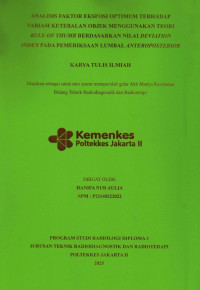
ANALISIS FAKTOR EKSPOSI OPTIMUM TERHADAP VARIASI KETEBALAN OBJEK MENGGUNAKAN TEORI RULE OF THUMB BERDASARKAN NILAI DEVIATION INDEX PADA PEMERIKSAAN LUMBAL PROYEKSI ANTEROPOSTERIOR.
Anteroposterior (AP) lumbar radiographic examinations require optimal exposure factorsrnto produce high-quality images while minimizing radiation dose in accordance with the ALARA (AsrnLow As Reasonably Achievable) principle. In this matter, the Rule of Thumb theory adjustsrnkilovoltage (kV) based on the variations in the object thickness to achieve an optimal DeviationrnIndex (DI) value in AP lumbar imaging using a Digital Radiography (DR) system.rnThis research applies a qualitative method with descriptive approach and was undertakenrnat Radiology Department of Budhi Asih Regional General Hospital between April and May 2025.rnThereafter, a purposive sample of 12 adult patients undergoing anteroposterior (AP) lumbar spinernradiographic examinations was selected. The exposure parameters (kV and mAs) were adjustedrnaccording to the Rule of Thumb theory, which recommends increasing 2–3 kV for every centimetrernof object thickness. Data on kilovoltage (kV), milliampere-seconds (mAs), object thickness, and thernDeviation Index (DI) were then collected through direct measurement and analysed using DIrncategory classifications.rnThe Rule of Thumb theory significantly optimizes the exposure factors in AP lumbarrnradiographic examination, producing high-quality images with low radiation doses. Thesernqualitative findings confirm the effectiveness of the theory in achieving optimal Deviation Indexrn(DI) values, supporting its application in clinical radiology practice and providing a strongrnfoundation for further research.
Ketersediaan
Informasi Detail
- Judul Seri
-
-
- No. Panggil
-
001.43 HAN a
- Penerbit
- Jakarta : Jurusan Teknik Radiodiagnostik dan Radioterapi., 2025
- Deskripsi Fisik
-
xiii + 28pages: illustration; 21 x 29cm.
- Bahasa
-
Indonesia
- ISBN/ISSN
-
-
- Klasifikasi
-
001.43
- Tipe Isi
-
-
- Tipe Media
-
-
- Tipe Pembawa
-
-
- Edisi
-
-
- Subjek
- Info Detail Spesifik
-
-
- Pernyataan Tanggungjawab
-
Hanifa Nur Aulia
Versi lain/terkait
Tidak tersedia versi lain
Lampiran Berkas
Komentar
Anda harus masuk sebelum memberikan komentar
 Karya Umum
  Filsafat
  Agama
Agama  Ilmu-ilmu Sosial
  Bahasa
  Ilmu-ilmu Murni
  Ilmu-ilmu Terapan
  Kesenian, Hiburan, dan Olahraga
  Kesusastraan
  Geografi dan Sejarah